
Royal Mail’s 8,000th EV: Why This Milestone Matters for the Entire Fleet & Logistics Sector
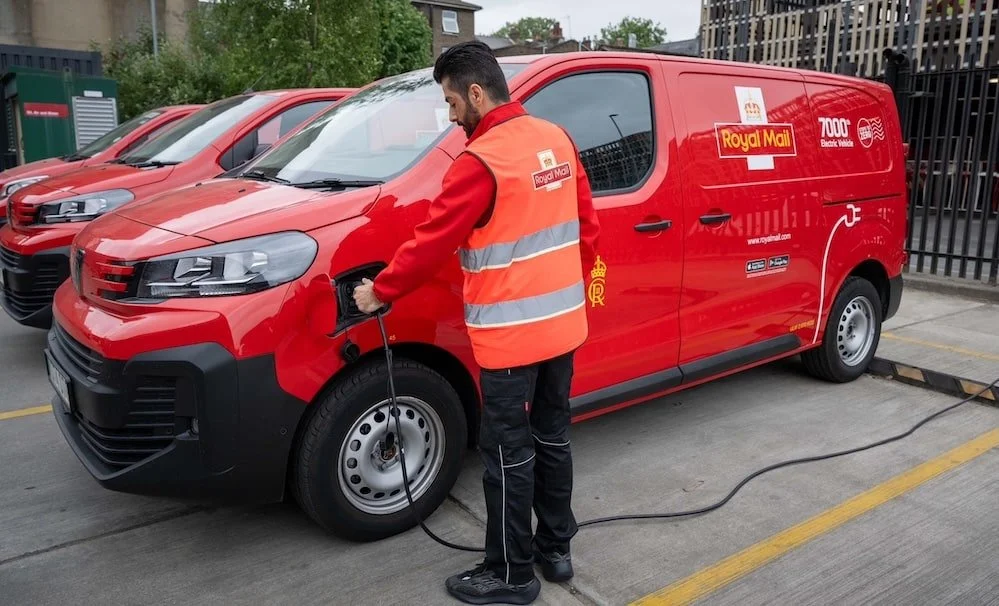
Image © Royal Mail
Royal Mail deploying its 8,000th electric vehicle is far more than a headline number. It is a powerful signal to the entire logistics and fleet sector that large-scale decarbonisation is not only achievable, it is operationally proven.
Eight years after introducing its first zero-emission vans in 2017, Royal Mail now operates one of the largest electric delivery fleets in Europe. Almost a quarter of its delivery offices are using EVs for daily operations, with nearly all vehicles charged on site using 100 percent renewable electricity. This is what progress looks like when ambition is matched with execution.
At éXō by ZeroMission, this moment reinforces what we have said all along. Data is the foundation of successful decarbonisation.
Why this matters beyond Royal Mail
Royal Mail’s journey shows that decarbonisation is not a single technology decision. It is a long-term transformation programme built on evidence, iteration and confidence gained through real-world data.
The steady progression from 100 EVs to 6,000, then 7,000, and now 8,000 vehicles demonstrates a clear pattern. Each phase builds on the last, using performance data, route analysis, charging behaviour and operational insight to de-risk the next step.
This approach is now extending beyond vans. The rollout of micro electric vehicles to improve delivery speed, alongside the introduction of electric HGVs for middle-mile logistics, marks a critical shift. Heavy-duty electrification has long been seen as complex. Royal Mail is proving that, with the right data and infrastructure planning, it is entirely viable.
Its first fleet of electric HGVs, supported by high-power ABB charging and Electric Freightway infrastructure, is expected to save around one thousand tonnes of carbon emissions annually while lowering operational costs. That combination of emissions reduction and cost efficiency is exactly what fleets are striving for.
Data turns ambition into action
From our perspective at éXō by ZeroMission, the most important takeaway is not the vehicle count. It is the intelligence behind the rollout.
Fleet decarbonisation succeeds when organisations can clearly answer questions such as:
Which routes are EV-ready today and which are not
How charging availability impacts daily operations
Where electric vehicles outperform diesel on total cost of ownership
When and how to introduce electric HGVs without disrupting service levels
These answers only come from connected, trusted data. Not assumptions. Not pilot projects in isolation. But continuous insight across vehicles, infrastructure, energy and operations.
Royal Mail’s success underscores that electrification at scale requires a unified view of the fleet. This is exactly where platforms like éXō exist. We help fleets turn operational data into confident decisions, enabling them to plan, deploy and optimise zero-emission vehicles across mixed fleets and multiple vehicle classes.
A blueprint for the industry
This milestone should give confidence to every fleet operator watching closely. Large, complex, time-critical logistics operations can transition to zero-emission vehicles while maintaining performance, reliability and cost control.
Royal Mail has shown that with the right strategy, the right partners and the right data, decarbonisation becomes a competitive advantage rather than a burden.
At éXō by ZeroMission, we see this as validation of a data-first approach to fleet modernisation. The future of logistics will not be powered by guesswork. It will be powered by insight.
And this is only the beginning.